

Remote working has many different aspects when trying to maximize your daily work routines and practices, connectivity, well-being, and feeling good. And being the best version of you as a remote worker.
In this blog post, we’ll explore the different aspects of how to succeed in remote working.
Beyond the Pajamas: The Comprehensive Tips to Thriving as a Remote Worker
Working from your living room sounds like a dream. No commute, flexible hours, possibilities to exercise, and your favorite snacks are just a few steps away.
But the reality can be messy sometimes. Your workday bleeds into your evening, your “office” is also your dining table, and the line between “home” and “work” dissolves into a single, blurry, 24/7 “on” time.
Succeeding as a remote worker isn’t automatic. It’s a skill that must be cultivated. It’s about mastering your environment, your workflow, your connections, and your habits. This guide will show you how to incorporate every essential tip for becoming the best version of your remote-working self. Remember always to adjust these points to your personal taste, because we are all different and some things work better and some do not.
1. The Foundation: Your Environment & Boundaries
Your physical and mental space is the bedrock of your success. If your foundation is weak, your productivity and well-being will crumble.
Work-Life Balance
This is the most critical aspect. You should create a clear separation between “work you” and “home you.”
- Set Specific Work Hours: This is important. Define your start and end times, communicate them to your team, and stick to them.
- Dress the Part: Avoid working in your pajamas. Dressing as if you’re going to the office signals to your brain that the workday has begun and helps you switch off when you change.
- Create a Designated Workspace: This is essential to physically separate work from home. When you are in this space, you are at work. When you leave it, you are not.
Design Your Workspace for Focus
Your environment directs your mindset.
- Build an Ergonomic Workstation: This isn’t a luxury; it’s a must. Invest in an adjustable chair, a monitor stand (to keep the screen at eye level), and a proper keyboard.
- Practice Good Posture: Use your ergonomic setup correctly. Take frequent “micro-breaks” to stretch and avoid discomfort and fatigue. It’s essential also to rest your eyes and brain every once in a while.
- Keep it Clutter-Free: An organized and clean desk reduces mental “noise” and helps you focus on the task at hand.
Optimize Your Environment (The Advanced Details)
- Manage Distractions: Silence unnecessary notifications on your phone and computer. Use website blockers or apps (like “Monk Mode”) to limit time spent on distracting sites during your focus hours.
- Optimize Lighting: Good lighting (preferably natural light) reduces eye strain and can improve your mood and energy.
- Manage Noise: Find ways to manage household noise, whether through a door, noise-canceling headphones, etc..
- Personalize Your Space: Create a space that is inspiring. Add plants, art, or anything that makes you feel good and professional.
- Mind Your Background: Be aware of what’s behind you on video calls. A clean, professional background (or a virtual one) shows you take your role seriously.
2. The Workflow: Productivity & Communication
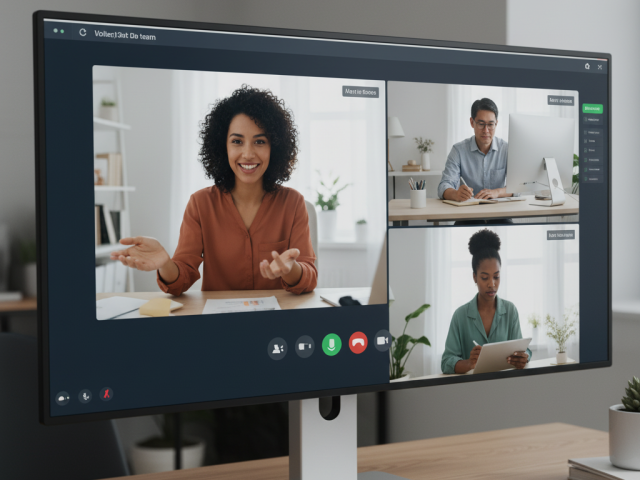
In an office, productivity can be observed. Remotely, it must be proven. This requires mastering a new, highly intentional way of working.
Architect Your Day
Don’t just start your day; design it.
- Set Clear Goals & Priorities: What do you want to achieve today? What are the most important tasks? Knowing this keeps you motivated.
- Plan Your Day and Week: Before you start, or the night before, map out your tasks. This helps you make the most of your time and avoid feeling overwhelmed.
- Schedule for Your Energy: Identify your most productive hours (your “peak” time) and schedule your most important, high-focus tasks for then.
- Break Down Large Tasks: A giant project is daunting. Break it down into smaller, more manageable steps. This makes it easier to start and builds momentum.
- Use Task Management Tools: A to-do list, a digital planner, or a project management tool is essential for prioritizing and tracking your work.
- Leave Buffer Time: Don’t schedule meetings back-to-back. Leave 10-15 minutes of buffer time for prep, follow-up, or just to catch your breath.
Master Asynchronous Communication
Remote work thrives on asynchronous communication – communicating effectively without needing an immediate response.
- Be Clear and Concise: Write clearly and provide all necessary context so your reader doesn’t have to ask follow-up questions.
- Use Descriptive Subject Lines: Make it easy for colleagues to know what you need at a glance.
- Set Expectations: Be clear about when you need a response.
- Use the Right Tools: Use project management tools for task updates, not just chat.
- Document Everything: Document processes and decisions in a shared, accessible place (like a wiki or shared drive) to create a “single source of truth.”
Mastering Global Teams & Time Zones
As you advance, you’ll likely work with teams across the globe. This requires a new level of asynchronous mastery.
- It’s About Overlap, Not Hours: The “9-to-5” model breaks. Your focus must shift to identifying 1-2 hours of “core overlap” for critical meetings.
- The Perfect Handoff: Master the “end-of-day handoff.” This is a concise summary you leave for the colleague in the next time zone, detailing what you finished, what’s ready for them, and where you’re blocked. This is the foundation of a 24-hour global team.
- Be Patient: You will send a message and get a reply 12 hours later. This is normal. You should organize your work while considering this natural delay.
Manage Your Workload
- Delegate Tasks: If you have the ability to delegate, do it. This frees up your time to focus on the most important things.
- Learn to Say “No”: It’s okay to say no to extra work, especially if you’re feeling overwhelmed. Assess your workload and politely decline additional tasks that exceed your capacity.
- Embrace Flexibility (Wisely): One of the great benefits of remote work is flexibility. If you need to run a task, you often can. Just be sure to communicate with your team and make sure your work is covered.
Navigate Remote Team Dynamics
- Use Collaboration Tools Effectively: Master the tools your team uses to facilitate seamless collaboration.
- Foster Inclusive Meetings: If you’re running a meeting, make sure to actively call on people and create space for everyone to contribute.
- Resolve Conflict: Address conflicts directly and respectfully. It’s often best to move a difficult conversation from text chat to a video call.
3. The Connection: Visibility & Teamwork
Out of sight can quickly become out of mind. You must be intentional about building trust and remaining a visible, valued member of the team.
Be Intentionally Connected
You can’t bump into colleagues in the kitchen, so you must create those moments.
- Schedule Regular Check-ins: Use video calls or chat to connect regularly with your teammates and manager.
- Join “Water Cooler” Chats: If your company has virtual social events, team-building activities, or a “non-work” chat channel, participate.
- Share Non-Work Updates: Engage in casual conversation. Building unity and strong team bonds happens when you see colleagues as whole people.
Build Trust & Visibility
- Proactively Communicate Progress: Don’t wait to be asked. Share updates on your work and be reliable in delivering on your commitments.
- Contribute to Discussions: Actively participate in team discussions and meetings.
- Showcase Your Work: When you complete a project, share the results.
- Ask for Help: If you’re struggling, don’t be afraid to ask for help from your team, manager, or a mentor. This builds trust, it doesn’t diminish it.
Battling Isolation & Finding Your “Why”
This is the “final boss” of remote work. Even with virtual coffees, loneliness can set in.
- Acknowledge the Isolation: First, know that it’s normal. You are not failing if you feel lonely.
- Build Your “Third Place”: For decades, life was (1) Home, (2) Work. The office was your “second place.” Now, home and work are one. You can create a new “third place” – a physical location that provides identity and community. This could be a gym, a co-working space (even just one day a week), a local sports league, or a regular volunteer group.
- Connect Your Work to a “Why”: It’s easy to feel like a “cog in a machine” when you’re just a name on a screen. Take time to connect your daily tasks to the company’s larger mission. If you can’t, it becomes even more critical to find a “why” outside of work – a hobby, project, or cause you are passionate about. This ensures your identity isn’t 100% “remote worker.”
4. The Sustainment: Health, Growth & Well-being
You are not a machine. A “perfect” remote worker is one who is healthy and sustainable, not one who burns out.
Fuel Your Body
- Stay Hydrated: Keep a water bottle at your workspace and sip throughout the day. Set hydration goals to ensure you’re drinking enough.
- Eat Healthy: A healthy diet improves energy, focus, and mood. Plan nutritious meals and snacks in advance to avoid “decision fatigue” and junk food.
- Prioritize Sleep: Most adults need 7-8 hours of sleep. Establish a regular sleep schedule and create a relaxing bedtime routine to wind down.
Move Your Body
- Stay Fit: Aim for at least 30 minutes of moderate-intensity exercise most days. Schedule it in your calendar like a meeting.
- Take Smart Breaks: Don’t just sit for hours.
- Pomodoro Technique: Work for 25 minutes, then take a 5-minute break.
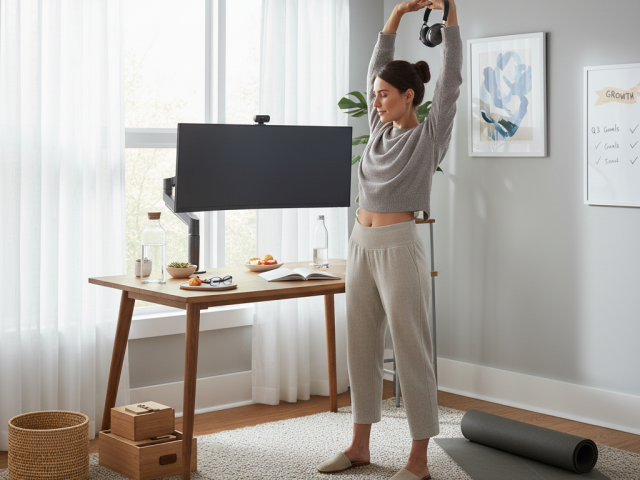
- Take short walks or stretch during your breaks to recharge. Some practice even walking meetings to combine exercise with their workday.
- Invest in Movement: If you struggle to get enough movement, consider a standing desk, a standing desk converter, an under-desk elliptical, or even a walking treadmill. Set reminders to stand up and stretch.
Protect Your Mind (Mental Health)
- Focus on Mental Health: Take care of your mental well-being just as you would your physical health.
- Practice Mindfulness: Use deep breathing exercises to manage stress. Meditating or using mindfulness apps can be incredibly helpful.
- Seek Professional Help: It is a sign of strength to talk to a therapist or counselor if you are struggling.
- Practice Self-Care: Set aside time for activities you enjoy. This could be a relaxing bath, reading a book, or meditating.
- Schedule “Me Time”: Put time for yourself and your hobbies on your calendar, just as you would a work meeting. Use a timer to remind yourself to step away.
Manage Screen Fatigue
- Rest Your Eyes (The 20/20/20 Rule): Every 20 minutes, look away from your screen and focus on something 20 feet away for 20 seconds.
- Use Reminders: Set a timer or use eye-care apps to remind you to look away.
- Adjust Screen Settings: Increase font size or adjust brightness to reduce eye strain.
- Filter Blue Light: Enable the built-in blue light filter on your devices. For extra protection, consider blue light-blocking glasses.
- Minimize Screen Time Before Bed: Set a technology time limit at least an hour before sleep. The blue light can disrupt your sleep. Read a physical book instead.
Reset and Recharge
- Connect with Nature: Spending time in nature has proven benefits. Take short outdoor breaks for fresh air, or even try working from a garden or park if possible.
- Take Vacations: It is crucial to take real breaks. Use your vacation time to fully disconnect from work, recharge, and come back refreshed and motivated.
5. The “Pro-Level”: Mindset & Security
Finally, to truly be the best, you may need to consider the high-level habits of remote professionals.
Cultivate Your Mindset
- Be Flexible and Adaptable: Things won’t always go to plan. The internet will drop, a meeting will be canceled. Adapt to challenges and make adjustments as needed.
- Embrace a Growth Mindset:
- Take Initiative: Look for learning opportunities and ways to improve processes.
- Develop New Skills: Stay up-to-date with industry trends.
- Seek Feedback: Actively ask for feedback and adapt to it.
- Embrace Challenges: View difficult tasks as opportunities for growth.
Secure Your Digital Self (Critical Point)
This is not optional. Working from home makes you a bigger target.
- Use a VPN: A Virtual Private Network encrypts your internet traffic, especially on public Wi-Fi.
- Practice Password Hygiene: Use a password manager and unique, strong passwords for all accounts.
- Secure Your Home Network: Ensure your home Wi-Fi has a strong password.
- Know Your Company’s Policy: Understand the rules for using personal vs. work devices and handling sensitive data.
6. Becoming the CEO of Your Remote Career
Working remotely doesn’t just change where you work – it changes how you grow. When the office disappears, so do the everyday cues that used to remind you what success looks like. The best remote workers don’t wait for someone to guide them; they learn to manage their own motivation, development, and visibility like professionals running a one-person company.
Create your personal vision
Think about what this remote chapter of your life should lead to. Maybe you want to move into leadership, build your expertise, or design a more balanced lifestyle.
• Write down your goals and review them every few weeks.
• Check if your daily habits actually move you closer to them.
• Remind yourself why remote work matters to you — freedom, flexibility, or focus.
Treat feedback as your GPS
Feedback doesn’t just happen when you’re remote; you have to invite it.
• Ask your manager or teammates regularly, “What’s working well? What could I improve?”
• Reflect on project outcomes – what you’d repeat, and what you’d change next time.
• Think of feedback as a navigation system, helping you stay aligned with your purpose.
Build systems that manage you
Routines beat motivation every time. Create simple systems that keep you accountable even when no one’s watching.
• Try weekly goals or personal OKRs.
• Track your key wins – completed tasks, learning progress, or milestones reached.
• Schedule time blocks for deep work, breaks, and planning.
Make yourself visible
Being seen isn’t bragging; it’s essential when you’re not in the same room as your team.
• Share short weekly updates about what you’ve achieved or learned.
• Keep a personal “wins log” to showcase progress during reviews.
• Communicate your impact clearly in meetings or chat channels.
Invest in continuous reinvention
Remote work gives you flexibility – use it to grow.
• Block time each week for learning or upskilling.
• Explore online courses, industry webinars, or new digital tools.
• Think of learning as updating your personal software – it keeps you competitive and curious.
Anchor yourself in purpose
When the days blur together, purpose pulls you back.
• Write down your personal “why” and keep it visible at your desk.
• Revisit it when motivation dips.
• Remember, your purpose isn’t fixed; it grows with you.
Conclusion
Being the “best” remote worker isn’t about being “on” 24/7. It’s about being intentionally “off.”
It’s about intentionally building your environment, mastering your workflow, fostering your connections, and prioritizing your own self-care. These aren’t just “tips”; they are the pillars of a successful, sustainable, and fulfilling remote career.
RESOURCES
📚 https://www.linkedin.com/advice/1/what-best-well-being-strategies-remote
📚 https://www.timedoctor.com/blog/remote-worker-employee-experience/
📚 https://experiencelife.lifetime.life/article/8-tips-for-the-healthy-remote-worker/
📚 https://www.toptal.com/remote/staying-healthy-while-working-remotely
📚 https://www.lifeinabreakdown.com/the-importance-of-taking-care-of-your-mental-health/
📚 https://www.linkedin.com/advice/3/what-some-ways-keep-your-focus-avoid-distractions-while
📚 https://www.topresume.com/career-advice/what-is-monk-mode
📚 https://activecollab.com/blog/project-management/break-down-tasks
📚 https://www.sbs.nhs.uk/article/16681/Working-from-home-and-looking-after-your-eyes
📚 https://www.hsph.harvard.edu/news/hsph-in-the-news/the-importance-of-hydration/
📚 https://www.betterhealth.vic.gov.au/health/healthyliving/food-and-your-mood
📚 https://health.gov/myhealthfinder/healthy-living/mental-health-and-relationships/get-enough-sleep